Insight Accelerator

The Canadian BECCS Advantage: Integrating Biomass Combined Heat and Power Plant with Carbon Capture

  • Resources
5 Min Read Nov 13, 2025

As more and more countries are turning to Bioenergy with Carbon Capture and Storage (BECCS) projects to create clean energy and mitigate climate change, it is important to understand how different biomass feedstocks influence the design and cost of carbon capture plants and, ultimately the levelized cost of capture (LCOC) of such plants.

As discussed in BECCS 101- Turning Biomass and Waste into Clean Energy, BECCS generates energy using biomass feedstock (i.e. forestry residues, agricultural byproducts, dedicated energy crops, and the biogenic waste used in Energy-from-Waste facilities) while capturing and permanently storing the resulting CO2 emissions underground. As biomass absorbs CO2 from the atmosphere during its growth, this process achieves negative emissions, making BECCS a key tool for reaching global net-zero climate goals. With Canada’s vast supply of sustainably sourced biomass and proven CO2 storage capacity, understanding how biomass can be incorporated into post-combustion amine-based carbon capture plants has many advantages.

Post-combustion carbon capture systems using amine-based solvents require substantial energy to operate, contributing significantly to the overall cost of CO2 capture. One potential way to improve project economics is by incorporating a combined heat and power (CHP) plant. CHP systems can supply both the steam and power needed to operate the capture plant, helping to reduce energy costs and improve the project’s overall efficiency. Typically, a CHP plant produces more electricity than is required to operate the carbon capture plant and supporting equipment. This surplus, known as “excess power”, can often be sold to the grid, generating potential revenue, or used on-site by the existing facility to reduce its reliance on purchased electricity.

While fossil fuels like natural gas have traditionally powered CHP plants, a net-zero future will require more clean and reliable power sources. By switching to a sustainably sourced biomass to power the CHP plant, it enables the generation of low carbon or even negative emissions electricity, while also permanently removing CO2 from the atmosphere (i.e. enabling the reduction of overall emissions). In addition to producing excess clean power, another by-product revenue stream, although modest in nature, is fly ash, which can be sold for agriculture applications like soil amendment to improve pH and nutrient levels.

Explore the diagram below to see how it works in practice.
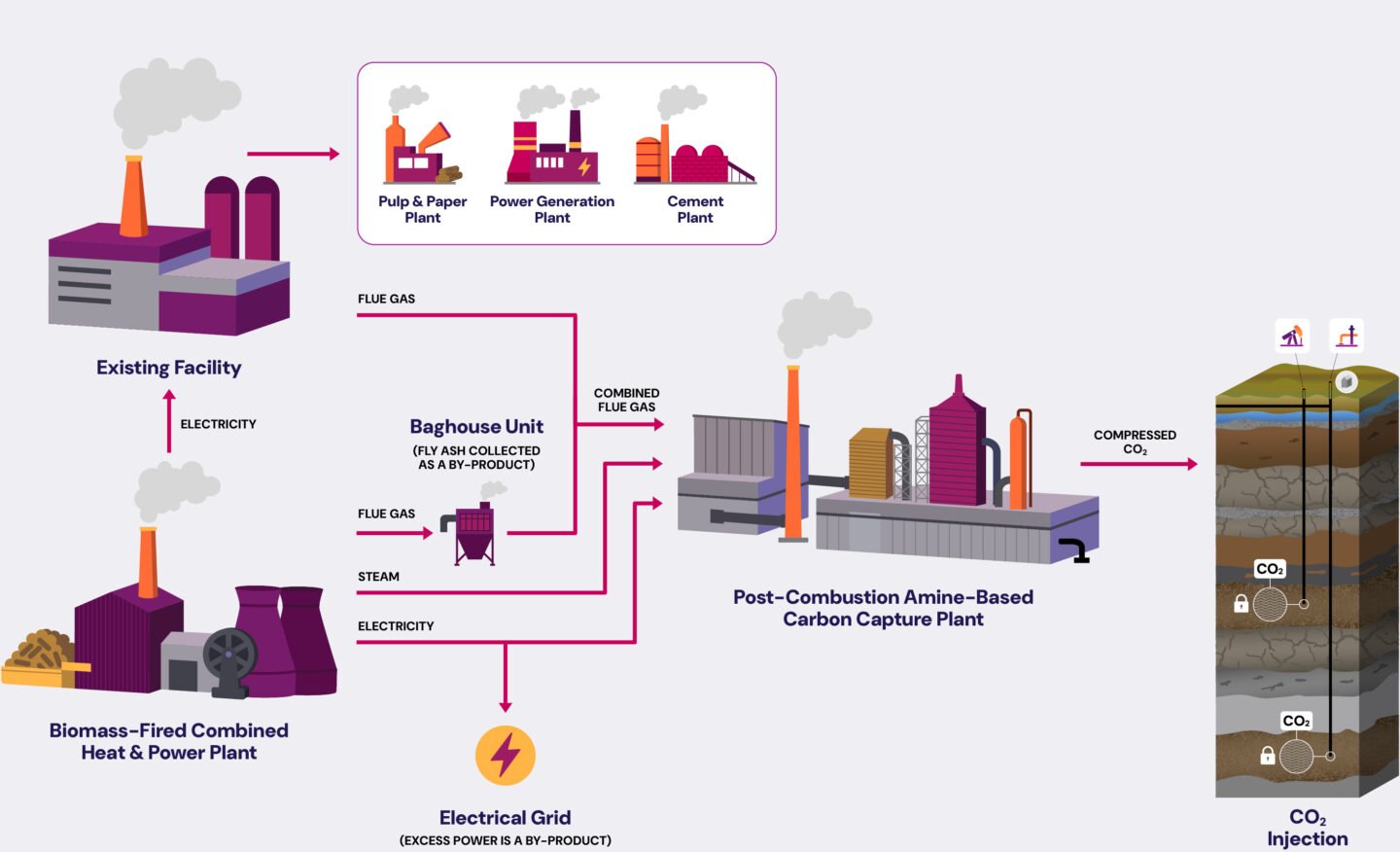
Integrating Biomass CHP with Carbon Capture

Facilities such as cement plants, pulp & paper mills, or power stations generate flue gas containing CO2. This flue gas is sent to a carbon capture plant.

A new biomass-fired CHP plant is added onsite, producing:
• Electricity to power itself, the carbon capture plant, or used on-site by the existing facility. Excess power that is created as a by-product can be sold to the grid.
• Steam to support carbon capture or other plant needs.
• Flue gas to be captured and stored. This stream is rich in biogenic CO2.
• Fly ash to be collected as a by-product and can be sold for agriculture applications.
• Flue gas to be captured and stored. This stream is rich in biogenic CO2, which is CO2 released from the decomposition or combustion or organic matters such as plants and other biomass.

The flue gas from both the existing facility and the biomass-fired CHP plant are routed together to a carbon capture plant where the CO2 is separated and captured using an amine-based solvent. The CO2 is then compressed into a liquid or dense phase to prepare it for transportation and storage.

The captured CO2 is transported and permanently stored into deep underground geologic formations or used in Enhanced Oil Recovery (EOR), turning a facility from an emitter into a carbon removal asset.

A baghouse unit is added to capture particulates and fly ash that can be collected and sold as a by-product to be used in agriculture.

The success of BECCS facilities depends heavily on the type and quality of biomass feedstock used.

Not All Biomass is Created Equal

Materials like wood chips, sawdust, harvest residues, and pulp waste can vary widely in energy content, moisture levels, ash content and composition depending on their source. These differences directly affect how efficiently biomass can be converted to energy and may require additional processing, like drying, to be viable.  The feedstock can also generate revenue through valuable by-products like excess power and fly ash. Evaluating the quality and energy density of biomass is essential to ensure it performs well in BECCS facilities and avoids unnecessary costs.

How Does Biomass Impact CHP Plant and Capture Plant Design?

Transitioning from natural gas to sustainably sourced biomass to power CHP plants significantly influences the design of both the CHP plant and the carbon capture plant. Biomass has a much lower energy density than natural gas, often less than one-third. To generate the same amount of heat and power as a natural gas fired CHP plant, a biomass-fired CHP plant must be larger and consume more fuel. The quality of the biomass also matters, as feedstocks with higher moisture content and/or lower energy density require an even larger CHP plant to meet the energy demands of the carbon capture plant. The type of biomass selected also impacts the amount of CO2 that the CHP plant produces, which in turn determines the size of capture plant required.

In short, biomass choice has a cascading effect: it sets the scale of the CHP plant, drives the design of the capture plant, and influences project economics. Larger systems can help offset costs by generating more revenue from excess power and by products like fly ash.

What We Learned

To understand the impact biomass feedstocks have on carbon capture design and cost, we conducted a study on a post-combustion amine-based carbon capture plant. This plant captures CO2 from the flue gas of an existing facility and the flue gas from a biomass-fired CHP. Our study considered four different types of biomass, each characterized by a unique combination of moisture content, energy density, and price which are outlined in the table below. 

Parameter

Unit Biomass 1 Biomass 2 Biomass 3 Biomass 4
Higher Heating Values (at 25 ˚C) kJ/kg 18,197 16,999 14,948 9,475
Lower Heating Values (at 25 ˚C) kJ/kg 16,784 15,597 13,352 7,613
Moisture %, weight 8.70 10.30 25.00 50.00
Ash %, weight 0.50 4.20 0.41 2.34
Carbon %, weight 45.80 42.45 37.62 23.66
Biomass Price CAD/GJ 6.44 3.96 8.09 8.11

Click here to learn more about the study’s methodology and assumptions.

å

BECCS Biomass Feedstock Insights

See firsthand how biomass feedstock type, ranging in various qualities and energy densities, impacts the costs, revenue, LCOC and CO2 capture rates of the carbon capture plant.

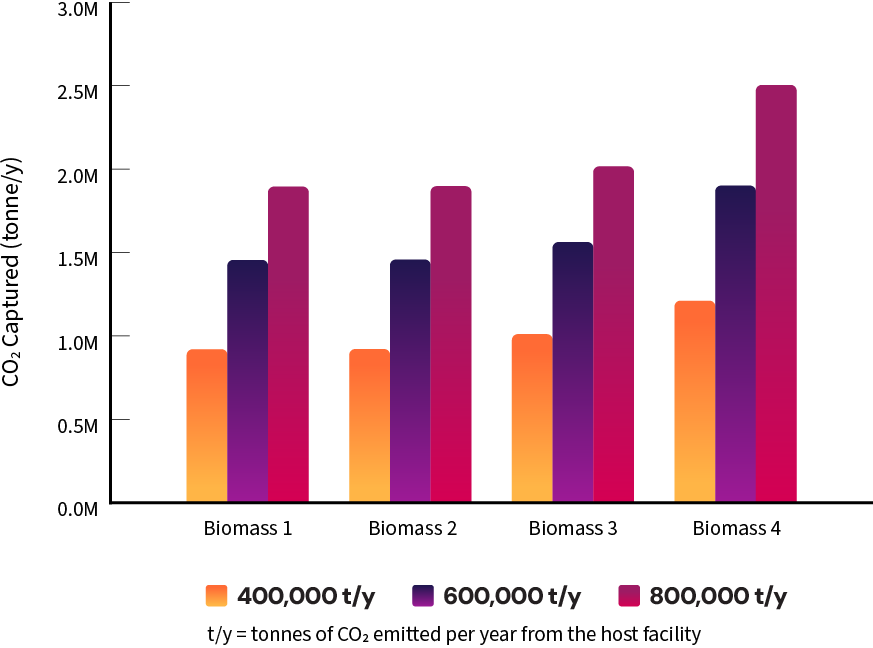
CO2 Captured

Key Insights

Lower-Quality Biomass = More Biomass = More CO2 Captured. The total CO2 captured is influenced by the amount of biomass processed. Lower-quality biomass (e.g., high-moisture, low-heating value such as Biomass 4) requires more mass to achieve the same energy output, generating more biogenic CO2 for capture.

Biomass Type Drives Capture System Design. The type of biomass selected impacts the scale of the carbon capture plant required. Lower-quality biomass (e.g. Biomass 4) generates more CO2, increasing the size of carbon capture plant required.

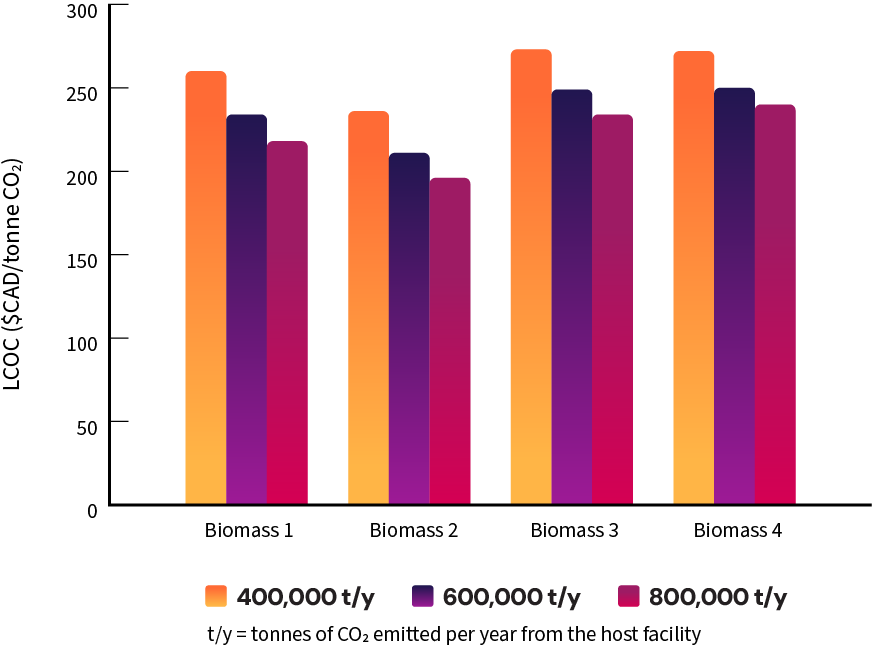
Levelized Cost of Capture (LCOC)

Key Insights

Lower-Quality Biomass = Higher Capture Costs. Lower-quality biomass (e.g., high moisture, low heating value such as Biomass 4),  requires more fuel to meet the same energy demand. This drives up fuel handling, operations and maintenance costs, and the size of the combined heat and power plant and capture plant leading to higher LCOC, especially at lower CO2 rates.

Bigger Plants Bring Down Levelized Costs. As the CO2 rates increases (from 400,000 to 800,000 t/y), LCOC drops across all biomass types due to economies of scale. Fixed costs are spread across more CO2 captured, making larger projects more cost-effective, even when using lower-quality biomass.

Low-Cost Biomass Can Outperform High-Quality Feedstock. Fuel price plays a critical role in cost performance. For example, Biomass 2, despite slightly lower heating value than Biomass 1, has a significantly lower LCOC because of its much cheaper price ($3.96 vs. $6.44 per GJ). 

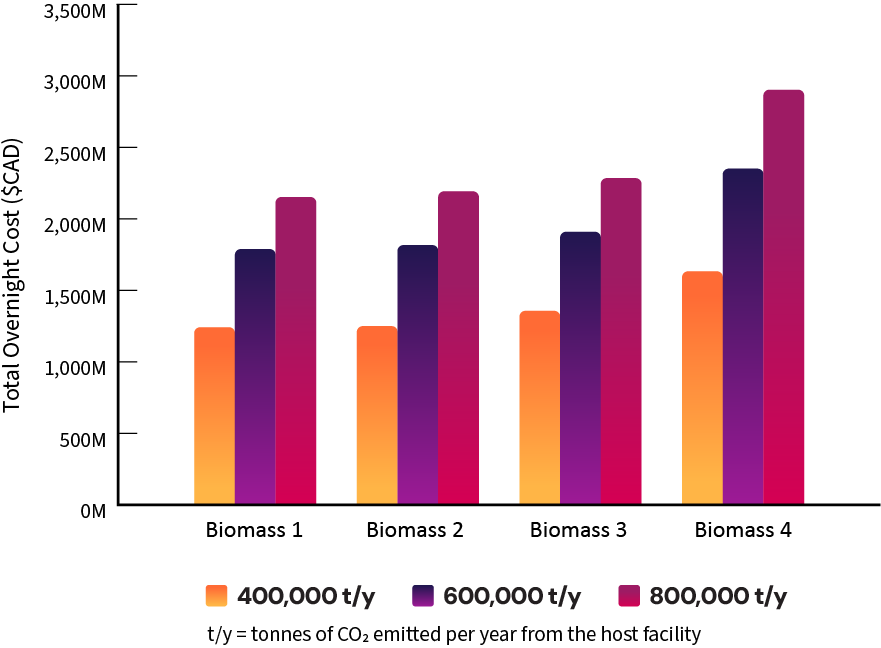
CapEx as Total Overnight Cost

Key Insights

Biomass Quality Drives Equipment Sizing. Low-quality biomass (e.g., high-moisture, low-heating value such as Biomass 4),  requires more feedstock to produce the same heat output. This increases the size of the biomass-fired combined heat and power (CHP) plant, the capture plant, and supporting infrastructure, such as dryers or fuel handling systems, driving up CapEx for both the CHP plant and the capture plant.

CHP System Grows with CO Volume.  When the existing facility or CHP plant emits large volumes of CO2, the capture system must be scaled accordingly. Low-quality biomass doesn’t inherently produce more CO2 per unit of mass but it does yield less energy. This means more biomass must be burned to meet the same energy needs, which leads to higher total CO2 emissions and a larger CHP system, ultimately driving up capital costs.

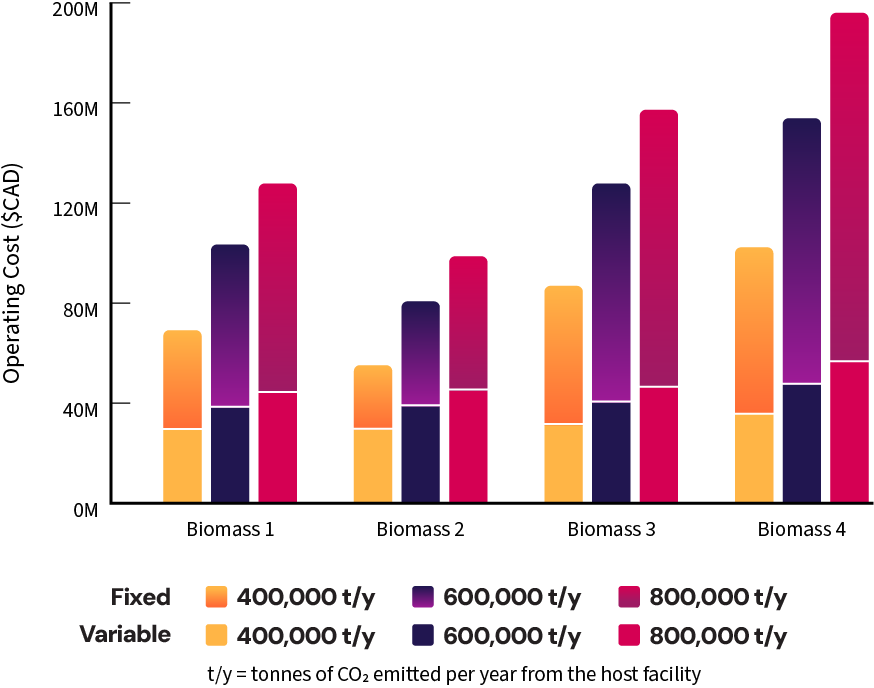
OpEx (Fixed and Variable OpEx)

Key insights

Biomass Quality Drives Operating Costs. The quality of biomass, particularly its moisture content and heating value, directly affects operating costs. Lower-quality biomass (e.g., high-moisture, low-heating value such as Biomass 4) requires more fuel to meet energy demands, resulting in increased consumption, utility usage (e.g., water, electricity), and higher operating costs for both the combined heat and power (CHP) plant and capture plant.

Feedstock Cost Matters. The price of biomass feedstock has a major influence on overall OpEx. Choosing a more expensive biomass can significantly increase fuel costs over the project lifetime, especially in systems with high fuel throughput requirements due to low heating value requiring more fuel to achieve the same output.

More CO Captured = Higher Utility Needs. A larger amount of CO2 from the existing facility increases utility demands and OpEx. Capturing more CO2 requires more steam and power for the amine-based capture plant, which increases operating costs.

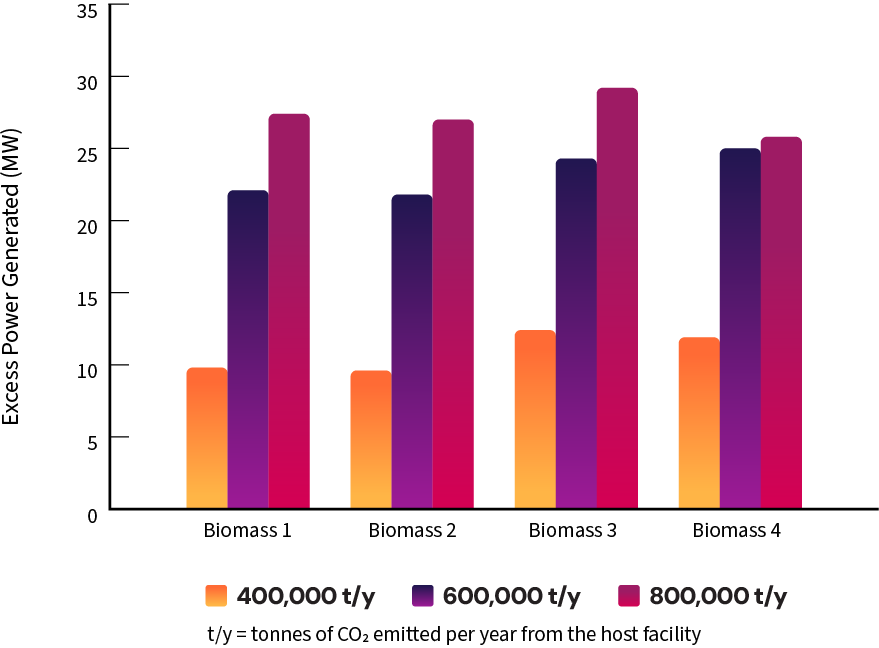
Excess Power Generated

Key insights

Larger Plants = More Power Potential. The amount of excess power available increases as the size of the combined heat and power (CHP) plant and capture plant grows. When CO2 volumes are high and a larger capture plant is needed, the associated CHP system is also scaled up, which can produce more electricity than is required internally, resulting in excess power for sale.

Biomass Quality Impacts Power Output. Lower-quality biomass (e.g., high-moisture, low-heating value such as Biomass 4) may reduce excess power available.  In our study, Biomass 4 required a larger CHP and more power to support the capture process due to its lower heating value. As a result, even though the system was larger, it produced less excess power for export when compared to the other biomass types studied.

Existing Facility CO2 Emissions Drives CHP Sizing. Facilities with higher existing CO2 flow rates need more capture capacity, which drives a larger CHP to support steam and power requirements. This also boosts potential electricity sales if the system is designed efficiently.

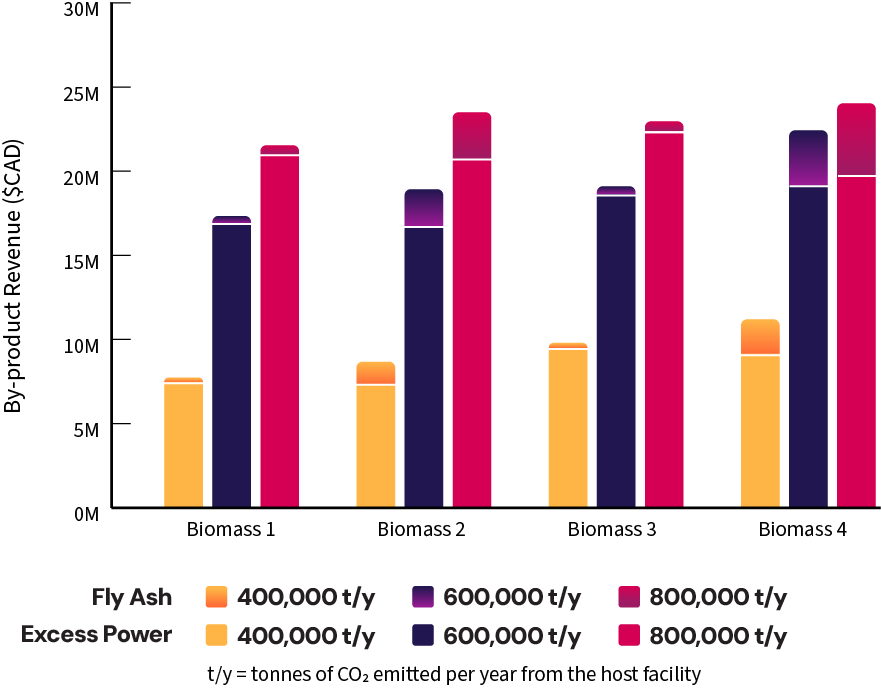
By-Product Revenue

Key insights

By-Product Revenue Can Offset Costs. Biomass-fueled combined heat and power (CHP) systems can generate by-product revenue through fly ash sales and excess power production, helping to improve overall project economics. The value of these by-products depends heavily on the feedstock used and how the system is designed.

Biomass Choice Affects Ash Volume and Value. High-ash biomass generates more fly ash, which can increase potential revenue,  if the ash meets quality standards for resale. However, it is important to note that higher ash volumes also require larger ash handling systems and more frequent maintenance, which can erode net gains.

Balance is Key: Bigger Isn’t Always Better. Lower-quality biomass (e.g., high-moisture, low-heating value such as Biomass 4) require larger CHP systems to meet energy demands, increasing both by-product outputs and system costs. While this can lead to more excess power or fly ash, the trade-off between CapEx, OpEx, and marketability of by-products must be carefully evaluated when selecting a biomass type.

The CCUS Insight Accelerator (CCUSIA) is a partnership between the Government of Alberta and the International CCS Knowledge Centre to accelerate and de-risk CCUS by sharing knowledge and developing insights from projects.